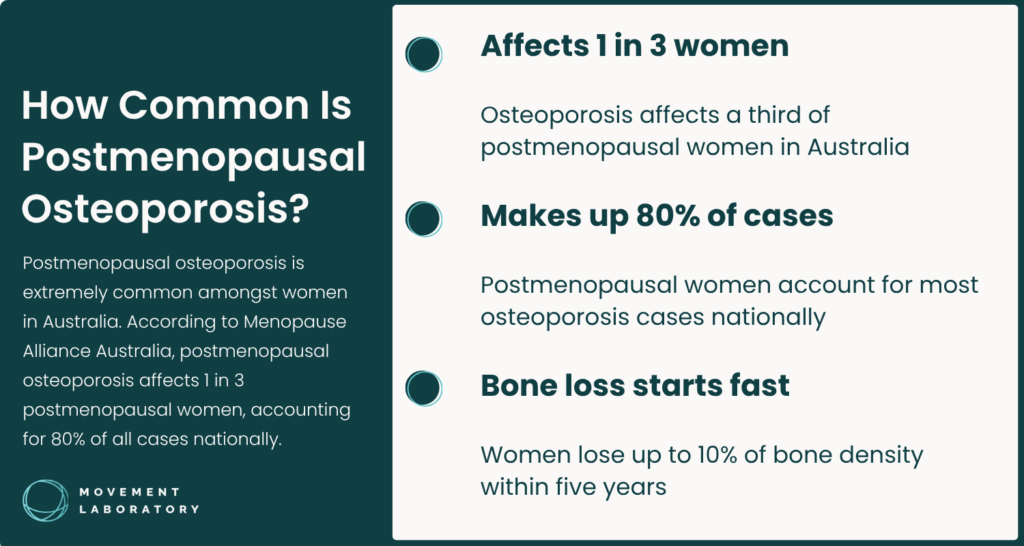
According to Menopause Alliance Australia, osteoporosis affects 1 in 3 postmenopausal women in Australia.
This accounts for some 80% of all osteoporosis cases nationally. Another alarming statistic is that over 50% of postmenopausal women will suffer from a fracture later in life due to weak bones. With numbers like these, it becomes increasingly evident that women should take the necessary precautions to reduce the likelihood of osteoporosis or at the least, minimise its impact.
What is postmenopausal osteoporosis?
Postmenopausal osteoporosis is a bone disease that leads to weakened bones, making them fragile and more likely to fracture or break.
What causes postmenopausal osteoporosis?
Postmenopausal osteoporosis is caused by the drop in estrogen levels that occurs after menopause.
Because estrogen protects bone density, when levels of it fall during and after menopause, bone breakdown happens faster than bone rebuilding. This results in bones becoming weaker as their mass lowers and the internal structures degrade. With the lowering of bone density comes a higher risk of fractures. In some cases,bones become so weak that minor bumps or falls can cause painful fractures, with the most common locations of the damage being in the spine, hip, or wrist.
How common is postmenopausal osteoporosis?
Postmenopausal osteoporosis is alarmingly common, affecting a third of postmenopausal women in Australia.
On average, women lose up to 10% of their bone density in the first 5 years after menopause and statistics suggest that more than half of women over 50 will experience osteoporotic fractures in their lifetime. Adding to the increased concern regarding bone health in postmenopausal women is that many have osteopenia, which is lower-than-normal bone mass that has not yet reached the threshold of osteoporosis. If not addressed quickly, bone density will continue to decrease to the point of being osteoporotic.
Are any groups more/less predisposed to postmenopausal osteoporosis?
There are genetic and lifestyle factors that can either increase or decrease your risk of postmenopausal osteoporosis.
Who is at an Increased Risk of Postmenopausal Osteoporosis?
Race, ethnicity, medical and lifestyle factors can all play a role in increasing your risk of postmenopausal osteoporosis.
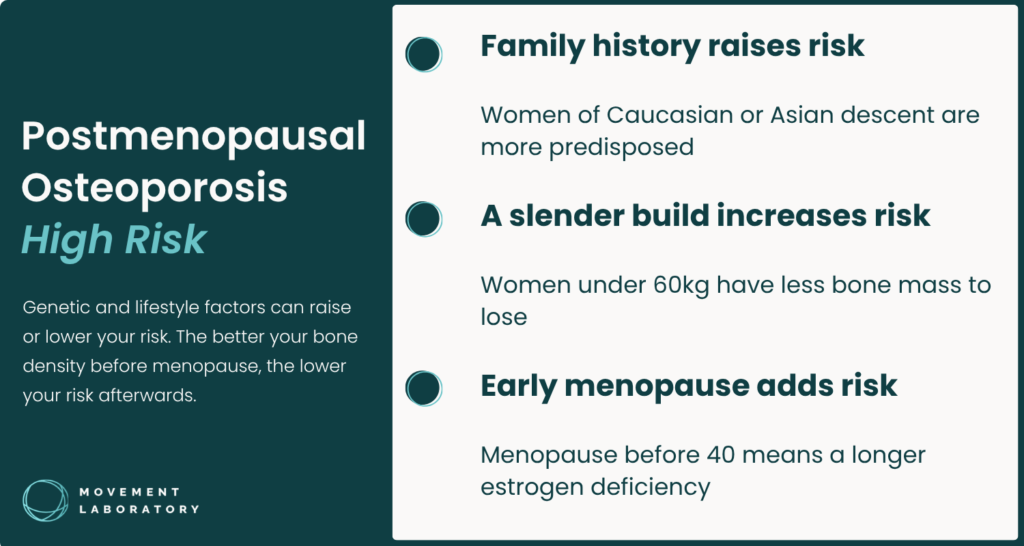
- Research has shown that women of Caucasian and Asian descent have a higher risk of developing Postmenopausal Osteoporosis.
- Women with a family history of fractures or osteoporosis, a slender physique, and early menopause have a higher-than-average disposition to postmenopausal osteoporosis.
- Of particular risk are women weighing less than 60 kilograms or having a thin build, because they have less initial bone mass to lose.
- Women who reach menopause prior to 40 years of age, or have undergone surgical removal of the ovaries, experience a longer duration of estrogen deficiency, therefore their chances of suffering from postmenopausal osteoporosis are elevated.
- There are also underlying medical issues that can increase your risk, such as women with rheumatoid arthritis, kidney failure, eating disorders, or gastrointestinal diseases that inhibit nutrient absorption.
- Research has also shown that long-term use of oral corticosteroids, thyroid hormone replacements, or certain immunosuppressants can accelerate bone density loss. Smoking and alcohol consumption may also increase the rate of bone mass depletion.
- For women with a diet low in calcium and vitamin D, who also don’t exercise regularly, the baseline skeletal strength is reduced, rendering them more susceptible to postmenopausal osteoporosis.
Who is of a Lower Risk of Postmenopausal Osteoporosis?
- While postmenopausal estrogen decrease affects all women, genetics and lifestyle factors impact the baseline risks across groups. Essentially, the better your bone health and density to begin with prior to menopause, the lower your risk of osteoporosis afterwards.
- Women of African, Polynesian or Hispanic descent are of a reduced risk of suffering from postmenopausal osteoporosis because their genetic bone mass density is on average, higher than women of Asian or Caucasian origin.
- Women with larger frames, higher body weights or elevated body mass indexes, are statistically less prone to osteoporosis than petite or slender women.
- Diet and lifestyle also play significant roles in reducing risk factors. Women with a high calcium, high vitamin D diet who maintain a consistent healthy bodyweight and exercise regularly (Particularly impact-based activities such as running and resistance training) have a reduced instance of postmenopausal osteoporosis.
Can postmenopausal osteoporosis be prevented?
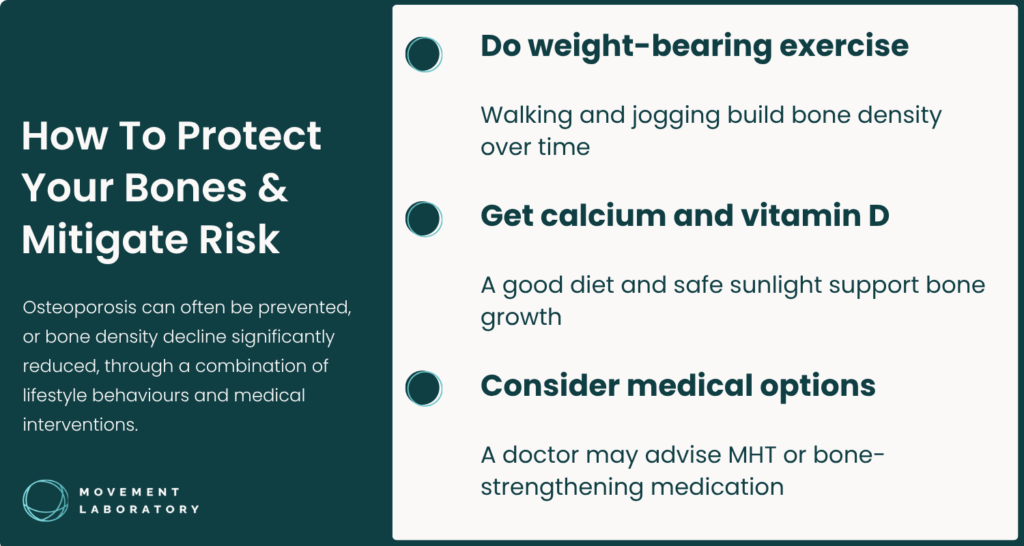
In short, yes, postmenopausal osteoporosis can often be prevented or the rate of bone density decline significantly reduced through a combination of lifestyle behaviours and medical interventions.
Lifestyle Habits
- Weight-bearing exercises performed regularly can help improve bone density. By participating in activities such as walking, jogging, doing yoga, playing tennis or pickleball, you are forcing your body to work against gravity. This creates healthy bone stress that increases bone tissue development.
- Resistance training, such as lifting weights or using resistance bands, is a great way to strengthen your muscles and supporting structures around joints, and protect your bones. These activities also place a load on your bones which may increase density.
- By eating a balanced diet that’s high in calcium and protein, you are providing your body with the nutrients it needs to support bone structure and growth.
- Expose your body, particularly your long bones, to healthy/safe amounts of daily sunlight or take Vitamin D supplements if recommended, to help your body absorb calcium.
- Avoid risk factors such as smoking and heavy drinking as they can increase bone loss.
Medical Interventions
- Menopause Hormone Therapy (MHT) involves taking estrogen and sometimes also progesterone as a means to slow or replace the demise in the natural production of these hormones. By taking them early in menopause you may be able to stop rapid bone loss.
- There are also bone-strengthening medications that doctors may prescribe, such as bisphosphonates, for women at high risk of fractures.
How to treat postmenopausal osteoporosis
The treatments for postmenopausal osteoporosis are much the same as the prevention methods, however prescription medications and HRT are often advised early as a means of proactively reducing the rate of bone density decline. The lifestyle habits will typically take longer to have an impact than the medical interventions, but they should still be implemented as soon as possible.