
Scoliosis (side-to-side curvature of the spine) can restrict the body’s movements, cause tension in back muscles, and lead to a host of uncomfortable postural issues.
If left untreated, scoliosis can worsen into a more severe spine curvature – leading to chronic pain, reduced mobility, and breathing issues.
This guide provides an overview of how physiotherapy can help with scoliosis.
How Does Physiotherapy Help With Scoliosis?
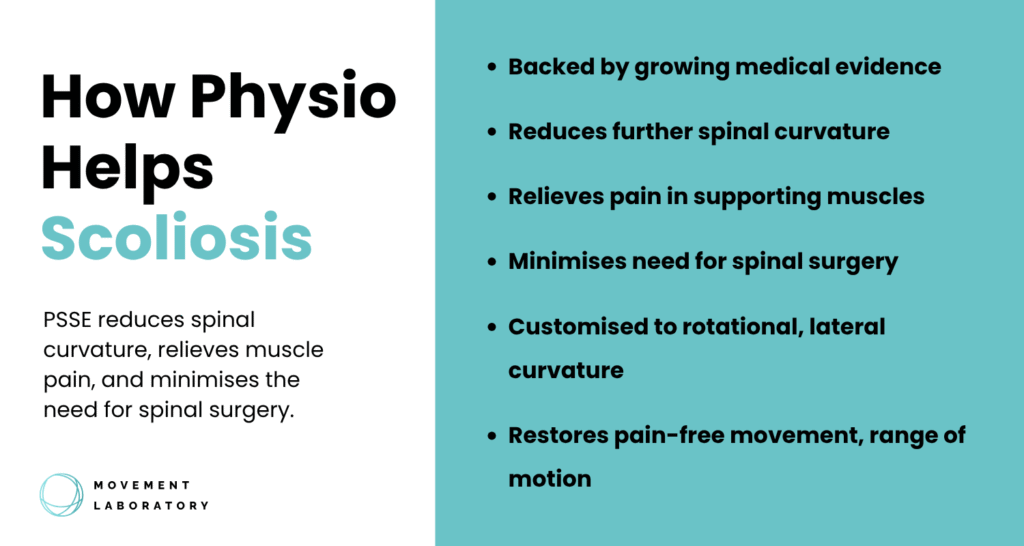
Physiotherapeutic Scoliosis-Specific Exercises (PSSE) have been shown to reduce further spinal curvature, provide pain relief for supporting muscles around the spine, and minimise the need for invasive spinal surgery.
Physiotherapy for scoliosis focuses on supporting the muscles around the spine and slowing or limiting the curvature of the spine. PSSE involves customised exercises based on the rotational and lateral curvature of the spine, along with postural correction to restore pain-free movement and a wider range of motion.
There is plenty of medical evidence that shows how PSSE can help manage scoliosis in younger children and teenagers. A 2022 review of scoliosis-specific physiotherapy methods, published in the International Journal of Environmental Research and Public Health, found growing evidence that these exercises can be an effective part of conservative (non-surgical) treatment for adolescent idiopathic scoliosis.
A long-term cohort study in 2015 found that physiotherapeutic scoliosis-specific exercises could limit the progression of severe curves in adult patients, making it a viable non-invasive treatment for adults with scoliosis.
Can Physiotherapy Cure Scoliosis?
Physiotherapy cannot reverse or cure scoliosis, but treatment can help with managing symptoms, restoring mobility, and improving quality of life.
There is no cure for scoliosis – more invasive surgical methods, such as spinal fusion, may be recommended in severe cases where the curve is significant or continuing to progress, but surgery can come with its own risks and recovery considerations.
For the majority of people with mild to moderate scoliosis, PSSE can provide ongoing support to slow progression, ease pain, and support everyday comfort and posture.
Physiotherapy Treatments for Scoliosis
Scoliosis presents differently in each individual – a physiotherapist will tailor the treatment approach to the person’s age, the type and severity of spinal curvature, and individual goals.
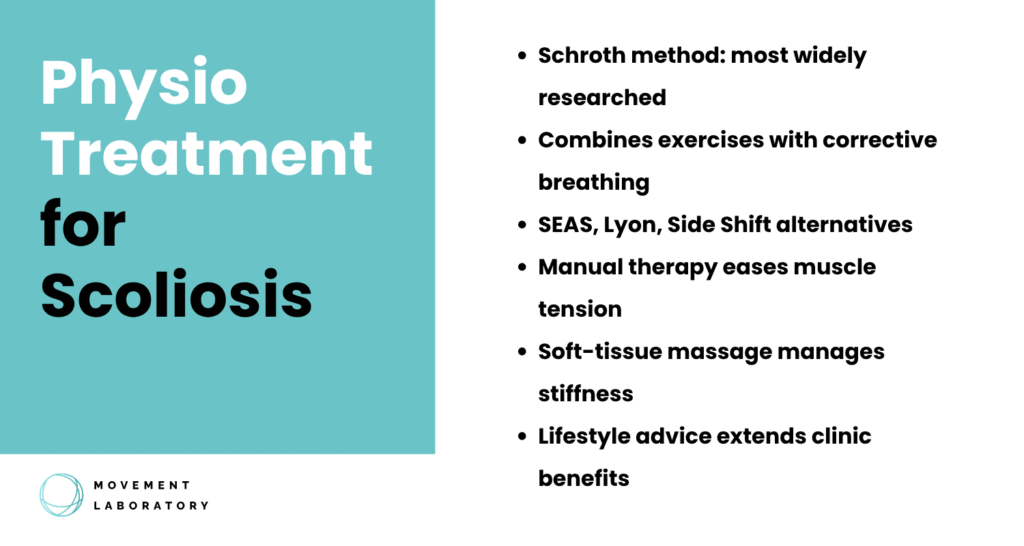
Physiotherapy for scoliosis includes both physiotherapeutic scoliosis-specific exercises and supporting techniques that complement treatment.
Physiotherapeutic Scoliosis-Specific Exercises (PSSE)
Physiotherapeutic scoliosis-specific exercises work in three dimensions across the spine’s sideways curvature, vertebral rotation, and overall posture.
The Schroth method is the most widely known and researched PSSE approach. It involves curve-specific exercises combined with corrective breathing and postural retraining, with the goal of improving alignment and strengthening the muscles that support the spine.
Other PSSE schools such as SEAS (Scientific Exercises Approach to Scoliosis), the Lyon method, and Side Shift, share similar overarching treatment principles with differences in execution.
Supporting Physiotherapy Techniques
A physiotherapist will also use complementary techniques like manual therapy and soft-tissue massages to ease the muscle tension and stiffness around the spine. These techniques do not directly address scoliosis, but provide consistent pain and tension management for improved quality of life.
A physiotherapist will also typically provide advice around lifestyle recommendations and adjustments to help people stay active. These recommendations may include activity modification, postural education, and home exercise programs to extend the benefits of in-clinic appointments into day-to-day schedules.