

Pilates is a form of exercise aimed at enhancing the body’s core strength, flexibility, and posture. Pilates classes offered by fitness studios and instructors range widely in style and intensity, but share a focus on general fitness rather than targeted recovery.
Clinical pilates is an adaptation of traditional pilates that focuses on rehabilitation rather than general fitness. Clinical sessions are aimed at rehabilitating injuries, reducing chronic pain, and improving functional movement.
What is Physio Led Pilates?
Physio-led pilates, or clinical pilates, combines pilates exercise movements with evidence-based physiotherapy approaches and goals. Rather than being delivered by a pilates instructor, a physio-led pilates program is facilitated by a physiotherapist who is trained in pilates.
A physiotherapist applies their knowledge of body structure and anatomy to tailor pilates exercises to each participant’s physical condition or injury. Physio-led pilates classes are highly personalised to each individual, and more effective for achieving target outcomes like moving without pain, strength-building in a particular area, or correcting a movement pattern.
How Does Clinical Pilates Differ From Traditional Pilates?
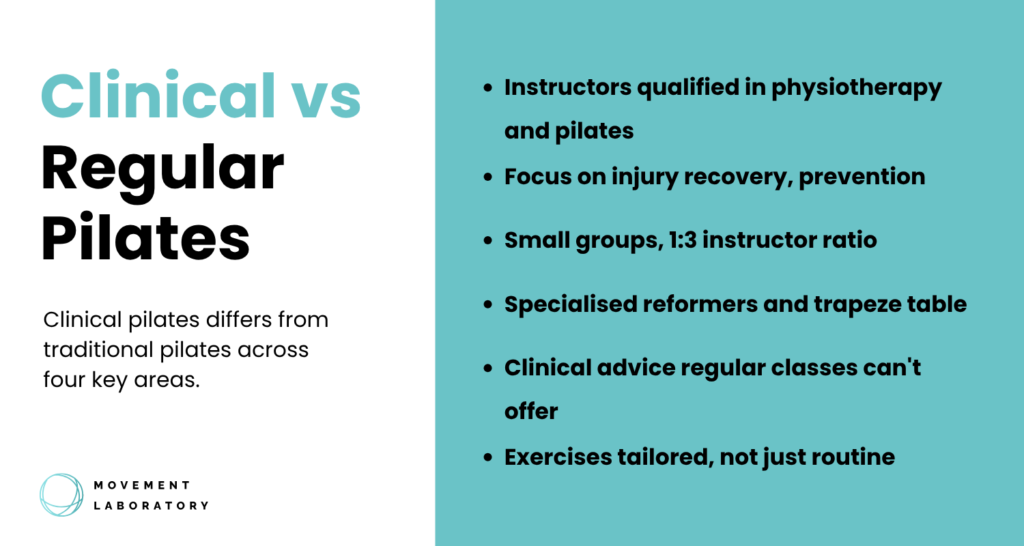
| Area of Difference | Clinical Pilates | Regular Pilates |
| Instructor Qualification | Physiotherapy and pilates | Only pilates |
| Program Focus | Injury recovery and prevention, pain management, better movement | General fitness |
| Class Size | Small group, typically 1:3 instructor to participant ratio | Bigger groups of 10 or more participants at a time |
| Equipment | Specialised physiotherapy equipment such as reformers and trapeze table | Floor mat and reformers |
Instructor Qualification
Physio-led pilates classes have instructors who are qualified in both physiotherapy approaches and pilates exercises. At Movement Lab, our physios have trained with well-known pilates organisations including Stott Pilates, Polestar, PilatesITC, and APPI.
Instructors of regular pilates classes can lead participants through exercises, but cannot offer clinical advice or diagnoses for injuries and pain.
Program Focus
Physio-led pilates is focused on addressing musculoskeletal conditions rooted in work and lifestyle. This commonly includes lower back pain from poor posture at a desk, or knee and shoulder injuries from sports. Clinical pilates also serves to future-proof the body from potential injuries by correcting improper movement patterns and guiding participants toward natural ways of moving.
Regular pilates aims to promote general fitness and wellness in participants, with no specific regard for each participant’s musculoskeletal conditions.
Class Size
Physio-led pilates are conducted in small groups of up to 3 participants with an instructor. This arrangement allows physios to pay closer attention to how participants are progressing and responding to the program, and make adjustments where necessary.
Regular pilates classes tend to have much bigger class sizes and do not offer the same level of individual attention and advice. Instructors lead routine exercises rather than tailoring them to participants’ needs.
Equipment
Physio-led pilates typically makes use of specialised physiotherapy equipment such as reformers and the trapeze table (also known as a Cadillac). These machines use springs, straps and adjustable resistance to support the body, allowing physios to modify pilates exercises for load and angles of movement.
Traditional pilates commonly uses floor mats – some studios may also use reformers, but without the clinical input from physiotherapists to maximise the use of the equipment for rehabilitation.
Benefits of Physio Led Pilates Classes
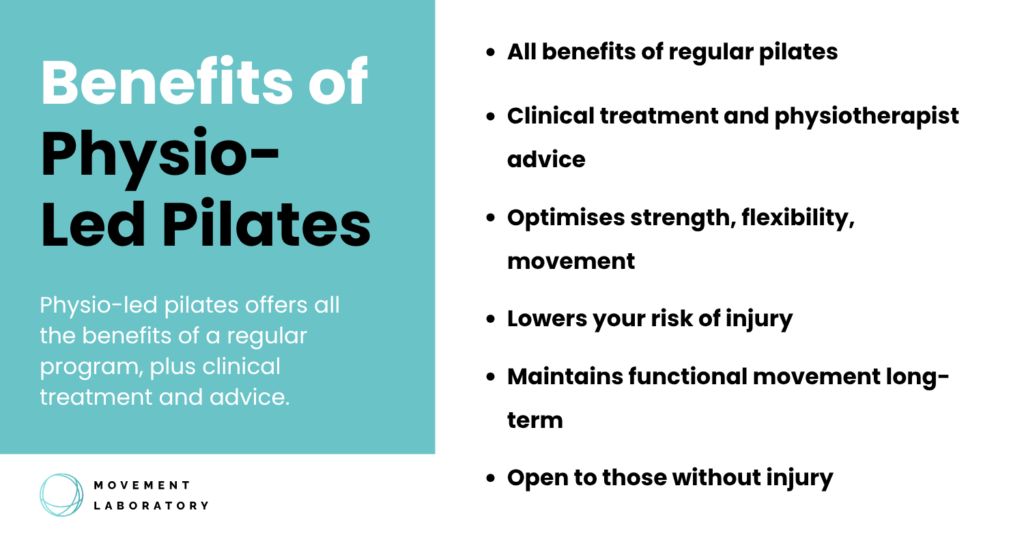
Physio led pilates classes offer all of the benefits of a regular pilates program, with the addition of clinical treatments and advice from physiotherapists.
Clinical pilates also goes beyond recovery and pain management to optimise the body’s movements for strength, flexibility, and a lower risk of injury. Many participants continue attending physio led pilates classes long after they have recovered from an injury to keep their functional movement in check for the long-term.
At Movement Laboratory, our physio led clinical pilates is also open to individuals who do not have any injury or pain, but want a more strategic approach for improving the way they move.
We provide a physiotherapy consultation for each participant at the start to get a better understanding of their physical condition, background, and movement goals.