

Neck pain is a common issue which can be effectively managed and treated by physiotherapists. It can be caused by a range of things, including awkward sleeping positions, poor posture, and muscle strain from looking down at our phones or sitting at a desk for a long time. Without treatment or lifestyle changes, neck pain generally won’t go away on its own.
Neck Pain Causes
Most Australians will have experienced neck pain at some point in their lives – research from the University of Adelaide found that 60 percent of people had a lower quality of life because of it.
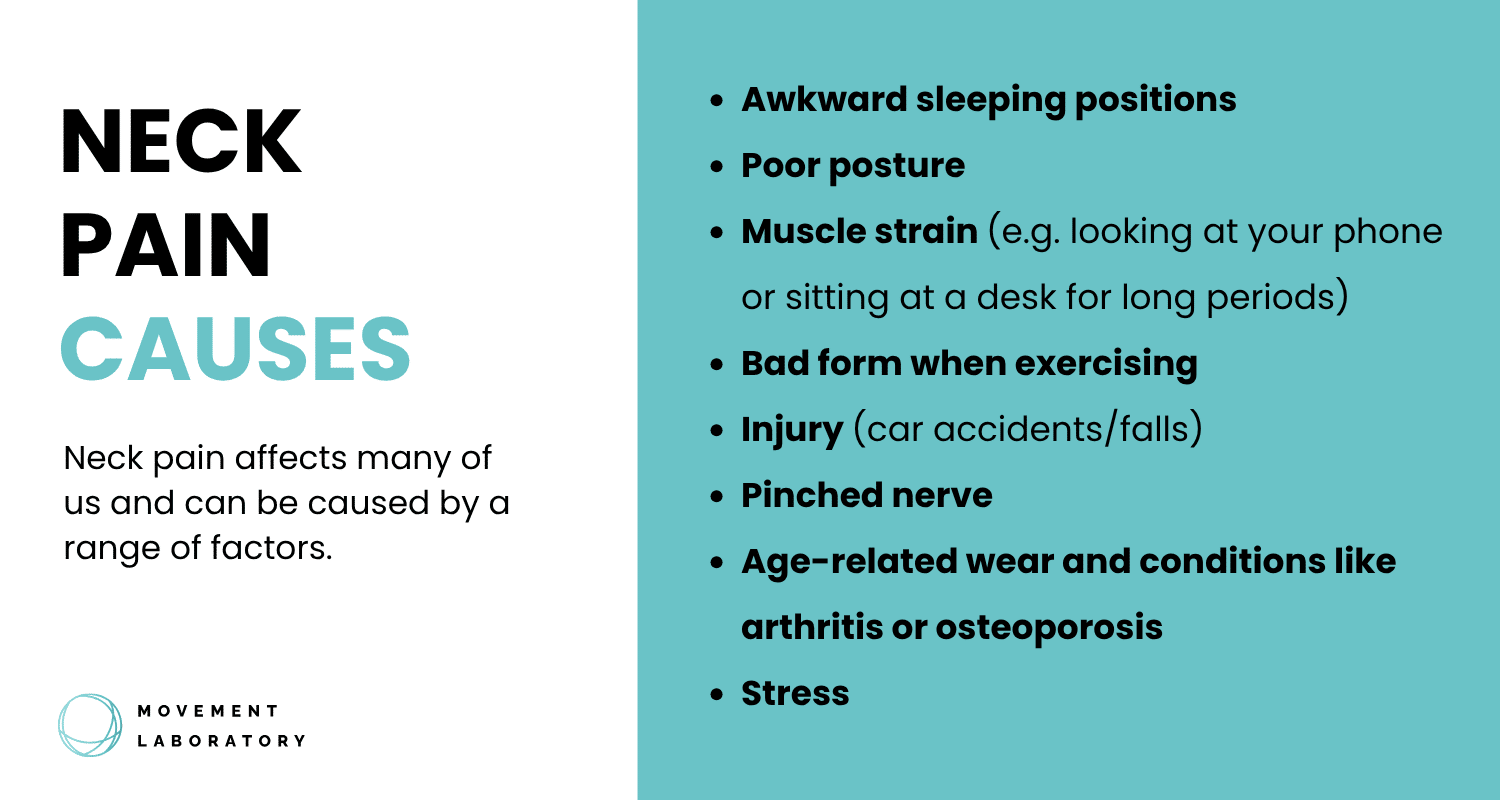
Neck pain can affect people of any age and be caused by a range of things. The most common causes are:
- Awkward sleeping positions
- Poor posture
- Muscle strain (e.g. from looking down at a phone or sitting at a desk for long periods)
- Bad form when exercising
- Injury (car accidents/falls)
- Pinched nerve
- Age-related wear and conditions like arthritis or osteoporosis
- Stress
How Physio Can Help
Physiotherapy can determine the root cause of your neck pain and develop a customised treatment plan based on the extent of the issue and your lifestyle.
Physiotherapists use a range of methods to help with neck pain, release tension in the muscles, and restore movement. Possible treatments include:
- Targeted massages
- Joint mobilisation
- Dry needling
- Posture correction
- Core stability exercises
- Lymphatic Drainage Massage
When You Should See a Physiotherapist
If you are experiencing neck pain that won’t go away or is getting worse, you may consider booking an appointment with a physiotherapist.
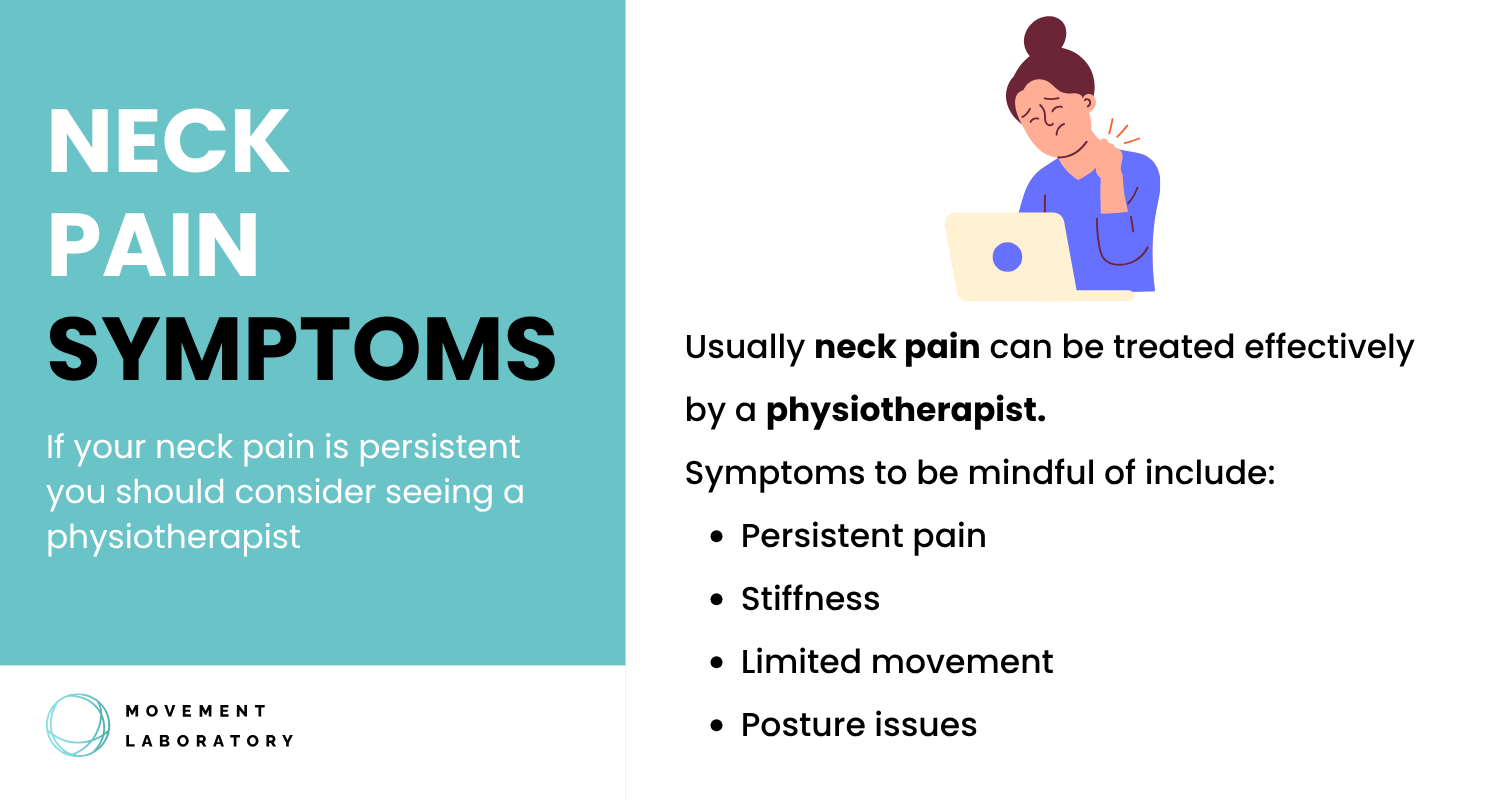
Symptoms you should look out for include:
- Persistent pain
- Stiffness
- Limited movement
- Posture issues
While neck pain is normally nothing to worry about and can be treated by physiotherapy, you may need to book an appointment with your doctor if neck pain is accompanied by:
- Radiating pain down shoulders or arms
- Headaches
- Pins and needles
- Fever
- Muscle weakness
The Movement Laboratory Process
Our physiotherapists at Movement Laboratory can pinpoint the root cause of your neck pain and develop a personalised treatment plan to manage your symptoms in line with your lifestyle and overall health.
Our approach aims to create long-lasting relief from neck pain for a better quality of life. When you begin your recovery journey with us, you can expect:
Consultation
During your first visit to our Sydney clinic, we will discuss your specific concerns, your medical history and any events leading up to the start of your neck pain. This will help us to understand the root cause of your pain and the best way to treat it.
Physical Assessment
We’ll carry out a physical assessment to look at the area causing you pain and your overall health. We will get you to do some simple exercises to determine your range of movement, flexibility, and posture.
Tailored treatment plan
Our physiotherapists will use the information gathered from your consultation and physical assessment to create a treatment plan tailored to your specific needs. Your plan will include a treatment schedule, self management strategies, and a timeframe for recovery.
Self-care tips
We’ll provide you with tips and strategies to help you manage your neck pain at home and prevent it from worsening again.
How Can I Prevent Neck Pain At Home?
There are simple and effective ways to prevent and manage your neck pain at home. You can try:
- Supporting your neck in bed by investing in a firm mattress and supportive pillows
- Avoiding sleeping on your front or twisting your neck in bed. Try to sleep on your back or side with your head and neck in a neutral position
- Moving your neck regularly and avoiding keeping it in the same position for a long time. If you work in an office, take regular breaks and move around when you can
- Maintaining good posture when exercising or lifting heavy objects
- Holding your phone or reading materials at eye level
If you would like to learn more about how Movement Laboratory can treat neck pain, contact us today to begin your journey to recovery. Book an appointment at our Inner West physio clinic by calling us on 02 9029 2449 or by using the form on this page.