
What Every Dancer, Teacher, and Parent Should Know?
Movement Laboratory Physiotherapy
Commencing pointe work is an exciting yet demanding milestone in a young classical ballet dancer’s journey. It is a fundamental requirement for professional ballet dancers, introducing new artistic and physical challenges. While pointe work elevates technical skill and strength, it also brings significant physical strain, requiring careful preparation to minimise injury risks and ensure longevity in ballet training.
Over the past decade, we have conducted more than 500 pre-pointe assessments, giving us deep insight into the critical factors that contribute to safe and successful pointe training. A structured assessment and tailored strengthening program are not just about receiving the “all clear” for pointe shoes, they are about understanding a dancer’s unique biomechanics, movement patterns, and long term performance potential.
In this article, we will unpack why pre-pointe assessment is the first step in safe dance practice and what we have learned from evaluating hundreds of dancers.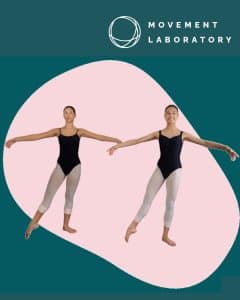
Pre-Point Assessment is our non-negotiable in safe dance practice.
As health professionals working with dancers from adolescence through to retirement and beyond, our focus is on enhancing performance without compromising longevity and safety. For many young dancers, the Pointe Assessment is also their first interaction with a dance physiotherapist, providing valuable insight into their body’s strengths and areas for improvement.
Gone are the days when young ballerinas were placed en pointe without a proper assessment to support informed decisions based on their physical readiness. Today, we prioritise objective, evidence-based evaluations to ensure each dancer transitions to pointe safely and sustainably.
Objectively, pointe work places 12 to 13 times the dancer’s body weight into the ankle joint and increases pressure on the big toe joint from 41 N/cm² barefoot to approximately 150 N/cm² en pointe (Hough-Cloes, 2022). This dramatic increase in force highlights why dancers need adequate strength, control, and technique before transitioning to pointe.
According to the International Association for Dance Medicine and Science (IADMS), young dancers should begin ballet training by the age of eight, participate in at least two ballet classes per week, and start pointe work in their fourth year of training.
Common pointe-related injuries include posterior ankle impingement, ankle sprains, stress fractures, and tendinopathies of the Achilles and flexor hallucis longus (FHL). These injuries are often caused by poor technique, weak lower limb strength, poor ankle alignment, and increased postural sway (Hough-Cloes, 2022).
Due to the demands of pointe work, a graded approach to training is essential. Pointe training should be introduced gradually under the supervision of a trained ballet teacher and a dance physiotherapist to ensure proper technique and strength development.
What Does a Pre-Pointe Assessment Involve?
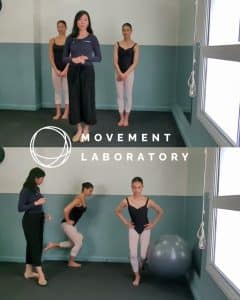
The assessment typically consists of three focus areas: anatomical, postural, and functional assessment. The first two examine the dancer’s overall stance and any compensatory factors that may impact joint loading and successful transition to Pointe work. The later evaluates ballet specific movements, including the topple test, airplane test, single-leg sautés, single-leg releve, and balance.
By focusing on these areas, we can provide dancers with individualised feedback and targeted exercises to support their progression, whether they are immediately ready for pointe work.
Among the functional assessments, certain tests serve as strong indicators of a dancer’s ability to transition safely to pointe.
Single Leg Relevé Test
We require 25 controlled single leg releve to go en pointe. The dancer must maintain proper foot articulation and pelvic stability. This test evaluates calf strength, foot control, and endurance.
Airplane Test
Designed to assess dynamic control, core stability, and single-leg balance, the airplane test requires the dancer to pitch forward with the non-supporting leg extended in derriere, performing five to seven controlled plié movements while maintaining alignment.
Common errors include loss of form, poor knee and foot alignment, and a dropping arabesque leg, all of which indicate weaknesses that need to be addressed before progressing to pointe.
Single-Leg Suté Test
This test is one of the strongest predictors of pointe readiness, as it highlights a dancer’s ability to control rapid movements and sustain technique under repetitive impact. The dancer must complete at least 16 consecutive sautés, ensuring a neutral pelvis, stable trunk, toe-heel landing, and full leg extension while airborne.
Errors such as trunk instability, inadequate push off, jumping all over the place, knee collapsing inwards are signs that they require specific lower limb biomechanical training.
For a comprehensive breakdown of these assessments and a self-assessment toolkit, visit our clinic website.
Have We Ever Advised Against Pointe Work?
In our clinic, 80% of dancers require some targeted strengthening exercises to address weaknesses found in the assessment. 20% of the dancers pass in the first go, and for a handful (perhaps 5 over the last 10 years), we have advised against pointe work.
Beyond assessing physical readiness, we also consider the dancer’s maturity, determination, and mental preparedness to ensure a smooth and sustainable transition.
For a small percentage of dancers, we may recommend delaying or even reconsidering pointe work. While these conversations are never easy, and ultimately, we are not the final decision makers, it is our responsibility to equip them with all the information needed to make an informed decision about their next steps.
The most common reasons we advise against pointe work include limited ankle range <170 degrees (180 pointe range is ideal to get on the box), which can be genetic; significant weakness or insufficient strength and technique; and, perhaps most importantly, a lack of drive and commitment. Additionally, dancers returning from an injury who are resuming full training too quickly may risk overloading their tendons and muscles. In these cases, we work closely with them to gradually rebuild strength and control before safely introducing pointe work.
Our Final Thoughts – A Holistic Approach to Dance Longevity
Passing a pre-pointe assessment is the starting point. Readiness for pointe is not a fixed state; it evolves through ongoing training, strength development, and proactive injury prevention. The real question is not whether a dancer is “cleared” for pointe, but whether they are equipped with the knowledge, physical preparedness, and support system needed to thrive both now and in the years ahead.
If we reframe the assessment as a Body and Strength Assessment for intermediate-level dancers, we can shift the focus beyond pointe readiness and towards a broader movement screening that benefits all dancers—whether they are training full-time or in a vocational setting.
It is crucial to engage a Dance Musculoskeletal Physiotherapist with a background in ballet—someone who understands not only the clinical implications of each test but also how those findings translate into the studio.

Even after pointe training begins, prehabilitation and conditioning should remain an integral part of a dancer’s routine. Experienced dance physiotherapists work collaboratively with ballet teachers to ensure that faulty movement patterns are corrected gradually. Safe dance practice should extend beyond the studio, bridging the gap between rehabilitation, conditioning and performance.
True dance longevity isn’t about rushing to the next milestone—it’s about preparing for what comes next. Pointe assessment is a vital investment in a dancer’s future, rather than just a box to tick on the way to pointe shoes.
Adam Morris – Dance Physiotherapist IADMS, APAM
Winnie Wu – Dance & Women’s Health Physiotherapist IADMS, APAM