

The knee is one of the most common parts of the body to injure, and one of the most debilitating. If knee pain is affecting your life, physiotherapy is an effective way of managing and treating the issue at its root cause. Physiotherapists will create a customised treatment plan to get you on the path to recovery and help you feel like your best self in no time.
How Does Physiotherapy Work to Treat Knee Pain?
Physiotherapy addresses conditions affecting the joints and surrounding muscles to treat pain, reduce stiffness, and restore movement and flexibility.
To get you back on your feet, our physiotherapists will assess the source of your knee pain and develop a tailored plan for your recovery.
This will involve strategies to strengthen the knee, reduce inflammation, and improve mobility and flexibility. Physio treatments may include strengthening exercises and manual therapy like joint mobilisation and massage.
What Causes Knee Pain?
Effectively treating knee pain and preventing it coming back can only be done if the root cause is identified.
Before beginning your therapy, a physiotherapist will carry out a thorough assessment of your overall health and lifestyle factors to see what’s going on and how best to treat it.
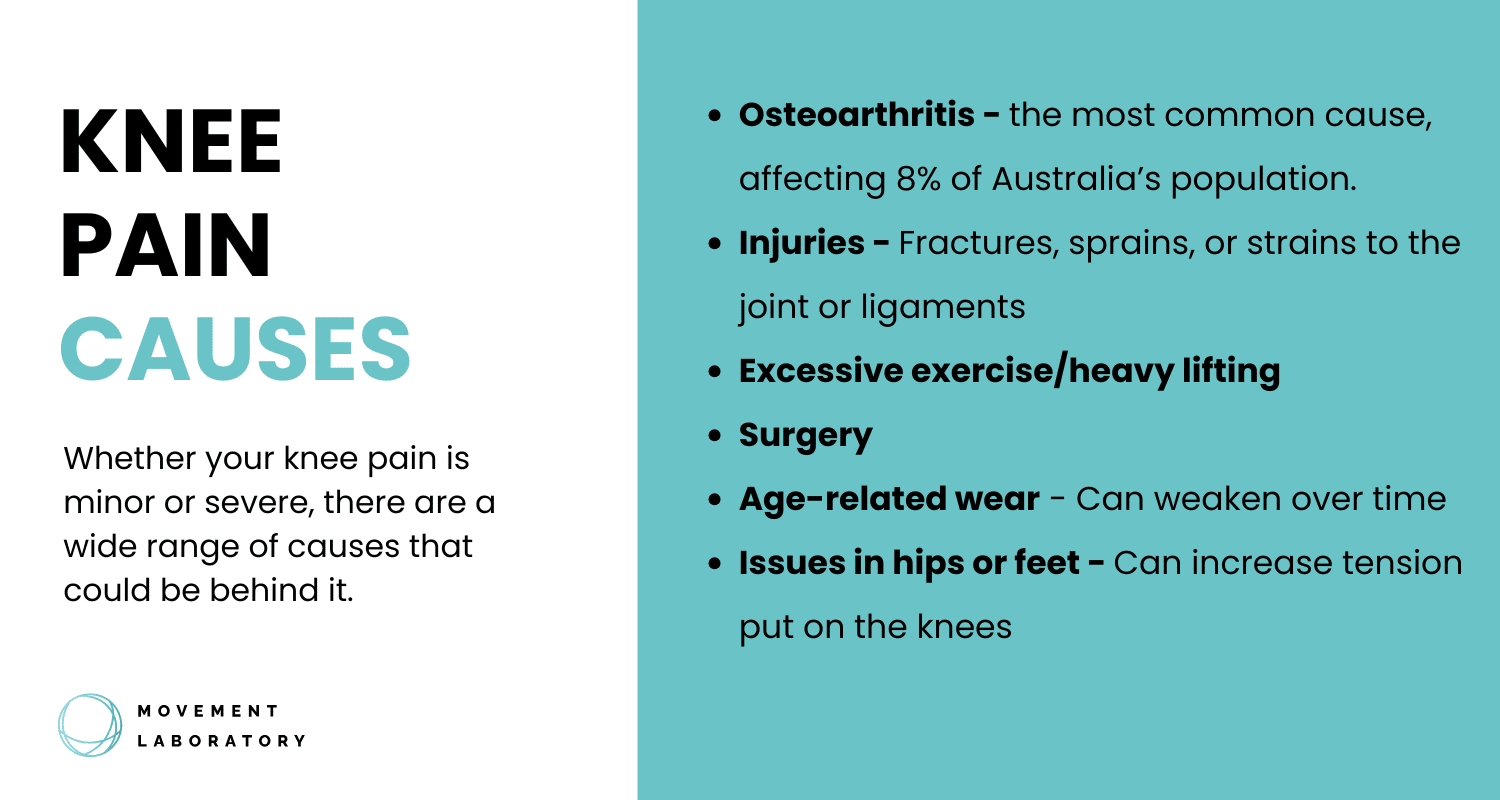
Whether your knee pain is minor or having a severe impact on your life, there are a wide range of causes that could be behind it. They include:
-
- Osteoarthritis – the most common cause affecting 8% of Australia’s population (Australian Institute of Health and Welfare)
- Injuries – Fractures, sprains, or strains to the joint or ligaments
- Excessive exercise/heavy lifting – Repeated movements can weaken the knee and cause damage
- Surgery – Recovery for a knee replacement may require physiotherapy to alleviate pain
- Age-related wear – The knees take the brunt of our weight throughout our life and can weaken over time
- Issues in hips or feet – Problems in the hips or feet can increase tension put on the knees
Physio Exercises to Treat Knee Pain
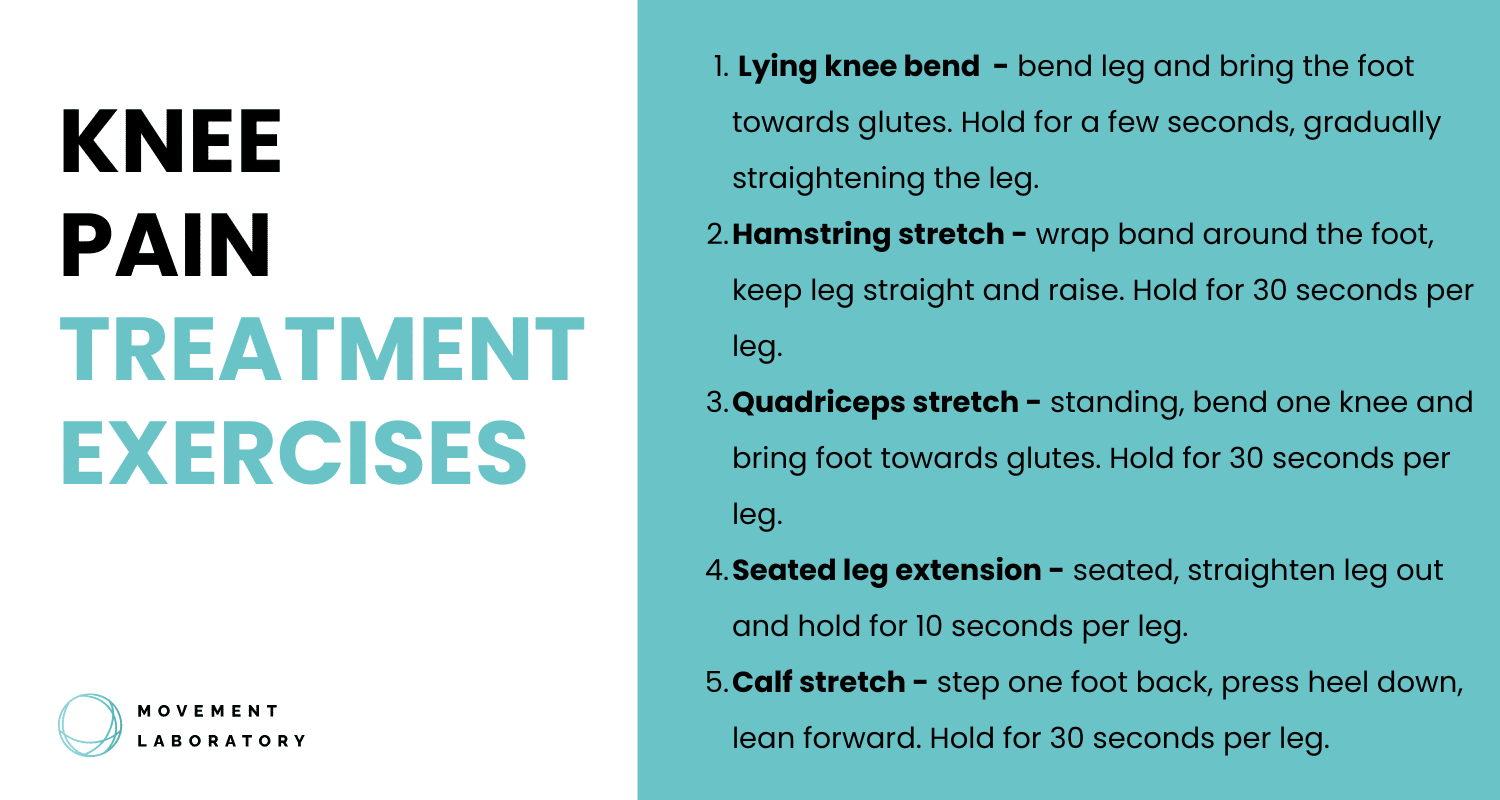
Once the cause of your knee pain has been determined, a physiotherapist will create your personal treatment plan including specific exercises and a certain number of reps needed to treat your condition. Some of the exercises could include:
1. Lying knee bend
- You’ll lie down on a bed or yoga mat on the floor and a physiotherapist will help you to straighten the affected leg
- You’ll bend your leg and slowly bring the foot towards your glutes
- Hold for a few seconds and gradually straighten the leg
2. Hamstring stretch
- A physio will get you to lie down on a mat on the floor
- You’ll be given a band to wrap around your foot
- Keep the leg straight and slowly raise it while holding onto the band
- Hold for 30 seconds then swap legs
3. Quadriceps stretch
- Stand close to a wall for balance – you’ll be able to hold on if you need to
- Bend one knee and bring the foot towards your glutes
- Hold it there for 30 seconds then swap legs
4. Seated leg extension
- You’ll sit on a chair with the affected knee bent
- Slowly straighten the leg out as far as it can go
- Hold for 10 seconds then swap legs
5. Calf stretch
- Stand facing a wall with your feet shoulder width apart
- Step one foot back and press the heel down while leaning forwards
- Hold for 30 seconds and swap legs
Is Physiotherapy Beneficial for Knee Pain?
Yes. Physiotherapy is extremely beneficial for knee pain because it is non-invasive and can get right to the cause of the problem, whether it be an injury or the effects of osteoarthritis. Physio-led pilates classes can also help with pain management for knee injuries.
It can also help you avoid further knee problems by improving joint mobility, reducing inflammation, and strengthening the muscles.
In some cases where a serious injury has occurred, surgery may be necessary. Doctors usually recommend physiotherapy first though to help ease pain and strengthen the knee.
Our Inner West physiotherapists at Movement Laboratory can assess the source of your knee pain to create a treatment and recovery plan tailored to you.
You can book a consultation by filling in the form on this page or by calling 02 9029 2449.