

Physiotherapy for Back Pain Sydney: What to Expect
Physiotherapy can be extremely effective in managing and treating lower and upper back pain, posture issues, and back stiffness.
Sharp shooting pain triggered by bending movements or pain that radiates from the lower back to the hip are common types of back pain that will generally not go away on their own.
If ongoing back injuries are affecting your quality of life, our physiotherapists at Movement Laboratory can assess the source of the pain and develop a tailored treatment plan for the fastest path to recovery. We take a holistic approach to back pain physiotherapy that looks at each client’s lifestyle and overall health to create long-lasting relief from back pain.
Back Pain Symptoms & Prevalence
Back pain is one of the most common muscular conditions – up to 90% of people experience back pain at some point in their lives. And while back pain can often be temporary, back injuries are prevalent as a result of working conditions, exercise, and obesity. While minor stiffness or a dull ache can improve with time, the Australian Institute of Health and Welfare estimates that 16% of Australians live with chronic back pain.
Back pain can show up in different ways, including:
- Dull, aching pain across the lower or upper back
- Sharp pain triggered by movement, lifting, or sudden twisting
- Radiating pain that spreads down the legs or into the shoulders
- Stiffness and reduced mobility when bending and twisting
- Muscle spasms that cause sudden tightening or cramps
Back pain that lasts for more than 2-3 days should not be treated as a minor issue – the symptoms experienced can be an early sign of more serious physical conditions such as sciatica or a slipped disc. Seeing a physiotherapist for back pain is imperative for pain relief and reducing the risk of further injury.

Physiotherapy for Back Pain: What’s Involved?
During the first visit, our physiotherapists will review the symptoms of back pain, your medical history, and the events leading up to the start of back pain. A comprehensive physical assessment is conducted to evaluate posture, range of movement, flexibility, and areas of tension.
We combine the information gathered from the consultation and physical assessment to pinpoint the root cause. Treating the root cause of back pain is crucial to provide relief from pain, restore function to the area, and prevent the injury from reoccurring.
Each of our patients receives a personalised treatment plan that includes an estimated recovery timeline and follow-up treatment schedule. Your assigned physiotherapist will walk you through the recovery process and the improvements you can expect at each stage of treatment.
The first session at our Newtown physio clinic will also include preliminary treatment for pain relief to ensure that you leave feeling better than before. Our physiotherapists may apply targeted massages, joint mobilisation, or dry needling to release tension in muscles and restore movement.
Types of Physio Treatments For Back Pain
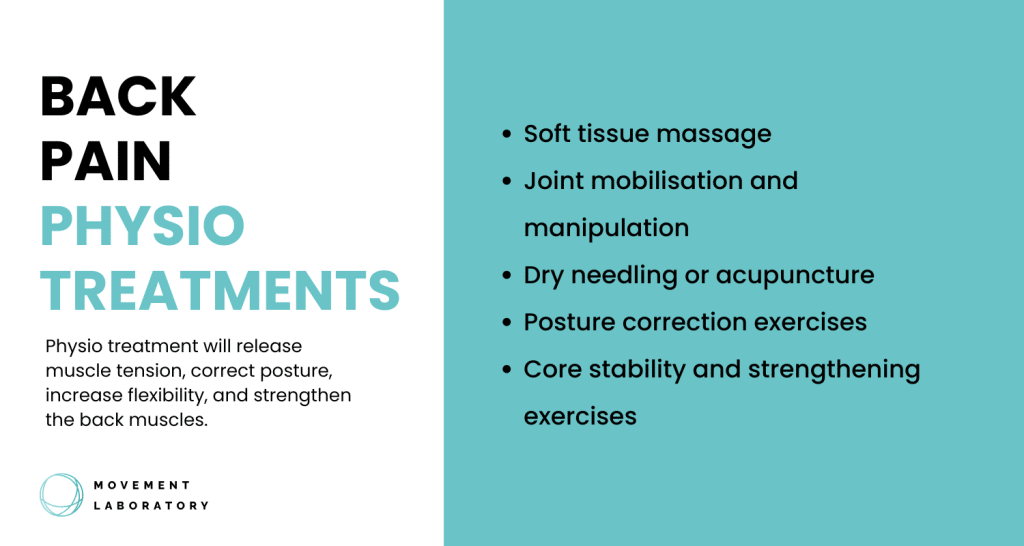
Our physiotherapists apply a range of hands-on treatments for back pain that are backed by clinical evidence. Back pain treatment will involve releasing tension in muscles, correcting improper posture, increasing flexibility, and strengthening the area.
Treatment for back pain may include:
- Soft tissue massage
- Joint mobilisation and manipulation
- Dry needling or acupuncture
- Posture correction exercises
- Core stability and strengthening exercises
- Lymphatic Drainage Massage
Movement Laboratory’s physiotherapists are also trained in Connect Therapy and the Thoracic Ring Approach, developed by Dr. Linda-Joy Lee.
Connect Therapy involves a holistic approach to back pain treatment where physiotherapists look at the body as a whole and evaluate how back pain could be affected by injuries or conditions in other connected areas, such as the shoulders, hips, or legs.
The Thoracic Ring Approach focuses on enhancing muscle strength and control around the ribcage and thoracic spine (located in the chest area). This approach involves manual techniques, taping, needling, and self-release techniques to train new muscle patterns and develop greater flexibility in the upper and middle parts of the back.